
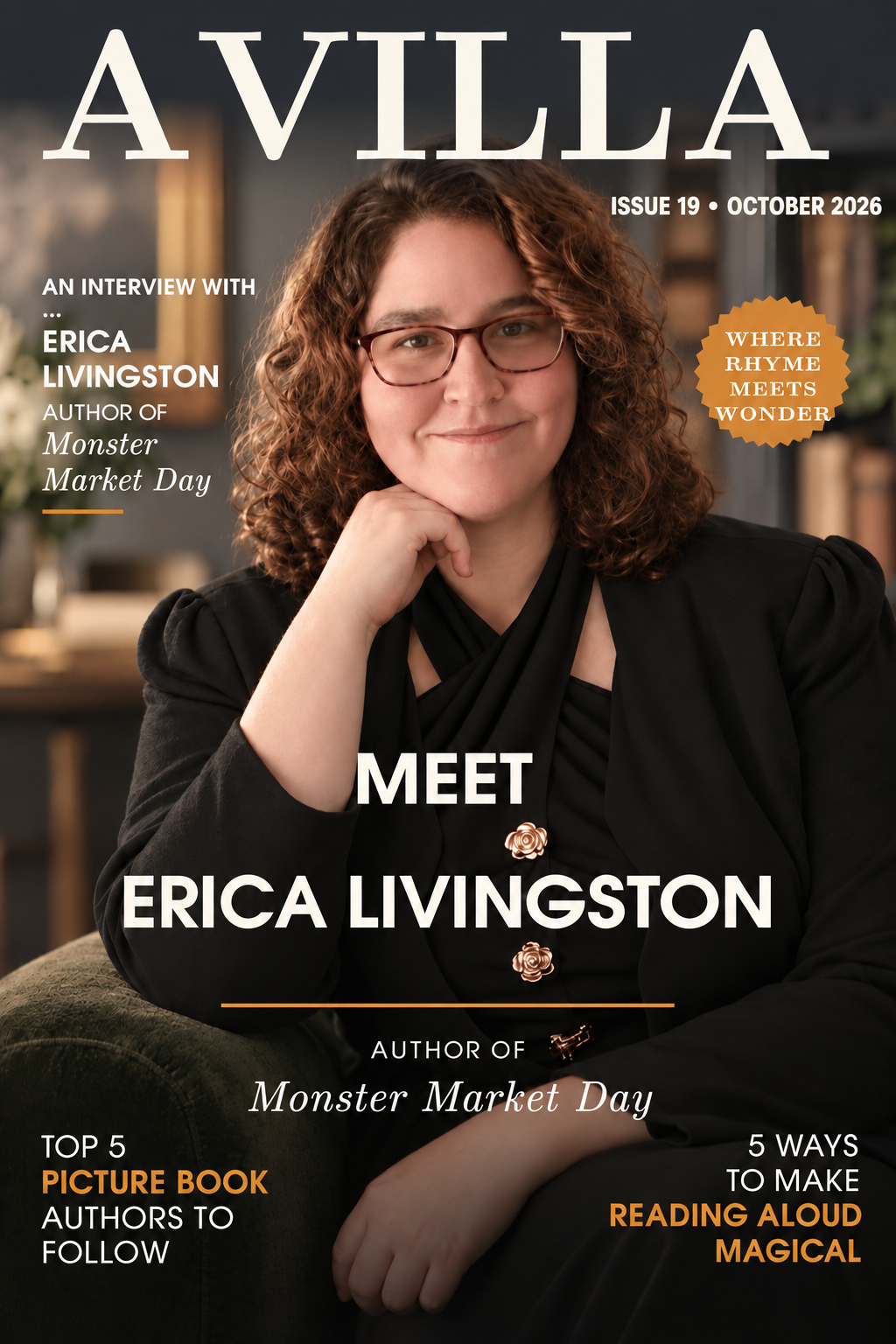
Interview with Erica Livingston
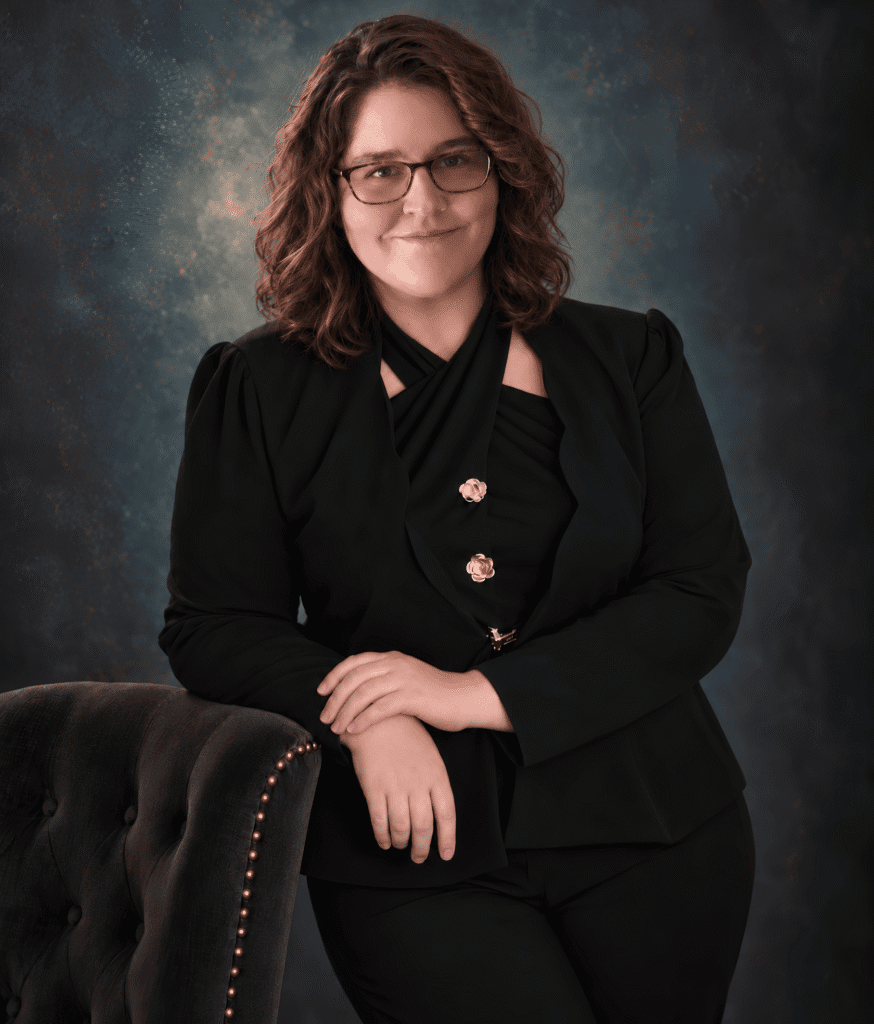
Erica Livingston is a children’s book author whose playful, rhyming tales are inspired by her daughter. Living in New Hampshire, she turns everyday moments, family jokes, and make-believe games into stories for readers aged three to eight. Her books include the Sock Gremlins series, where missing socks are no accident, the Monsterberry Kids adventures, the Paige Mysteries, and standalone tales such as The Littlest Fairy and the Dancing Scarecrow. As both author and independent publisher, she shapes every part of her books, from the first rhyme to the final page. Her storytelling blends imagination, humour, gentle life lessons, and heart to create books children ask to hear again and again.
by Dr. Chikodi Olasode • Issue 19, October 2026
Every story you write is inspired by your daughter in some way. Which moment with her first sparked one of these three books?
LIVINGSTON: The Littlest Fairy and the Dancing Scarecrow actually started while we were sitting in a doctor’s office waiting room. I was making up a story to keep my daughter entertained while we waited. It was just something fun between the two of us at the time, but I kept thinking about it afterward and ended up turning it into a book.
Missing socks are a universal household mystery. When did you decide the culprits were gremlins rather than the dryer?
LIVINGSTON: That was a family joke long before it was a book. If a sock went missing, we blamed the gremlins. It was more fun than blaming the dryer! After saying it for so long, I started thinking about what these sock-stealing gremlins would actually be like, and The Sock Gremlins grew from there.
Holly’s fairy socks vanish just before Christmas. Why did you want the Sock Gremlins world to meet the holidays?
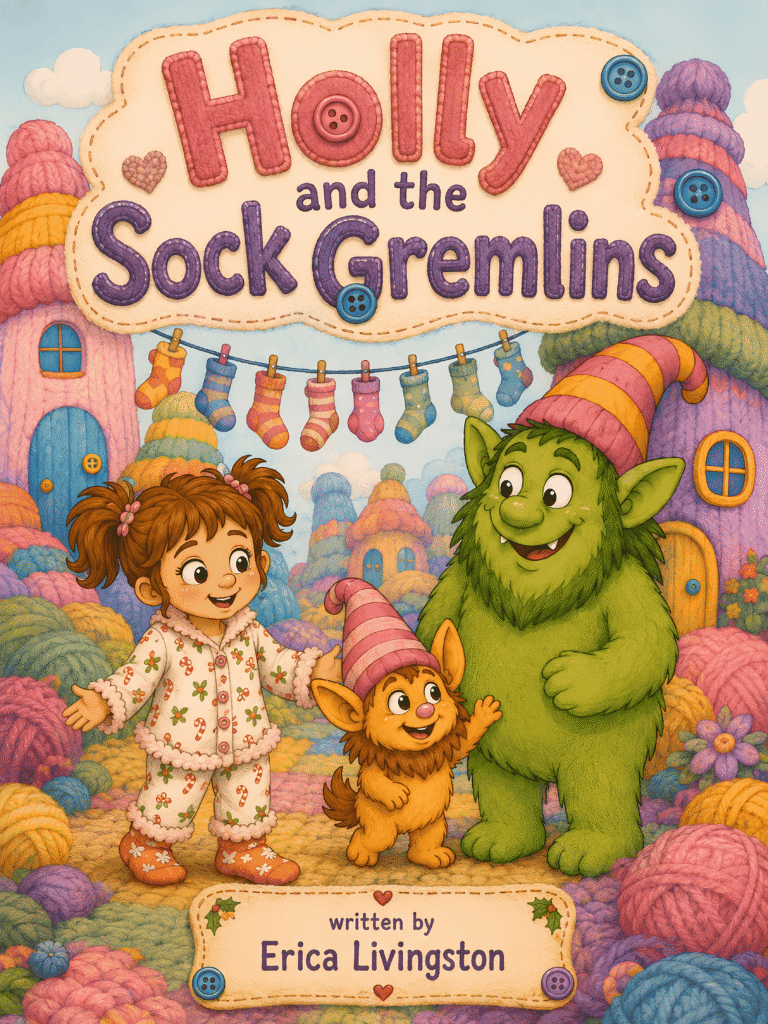
LIVINGSTON: Holly and the Sock Gremlins is the second book in the series, and I wanted to build on the world from the first book without just repeating the same kind of story. Since it takes place around Christmas, I thought it would be fun to give the Sock Gremlins a holiday of their own too—The Sock Exchange. My daughter loves fairies, so that’s where Holly’s fairy socks came from. It gave the sequel something new while still keeping the same playful feel as the first book.
A tiny fairy and a scarecrow that springs to life is a striking pairing. What image did this story grow from?
LIVINGSTON: It actually didn’t start with one specific image. The story began when I was making something up for my daughter while we were waiting at the doctor’s office, and the fairy and the scarecrow came out of that. I liked the idea of putting two characters together who you wouldn’t normally expect to become friends—a tiny fairy and a scarecrow—and then seeing where their adventure took them.
Monster Market Day turns a shopping trip into an adventure. Was there a real errand with your daughter behind it?
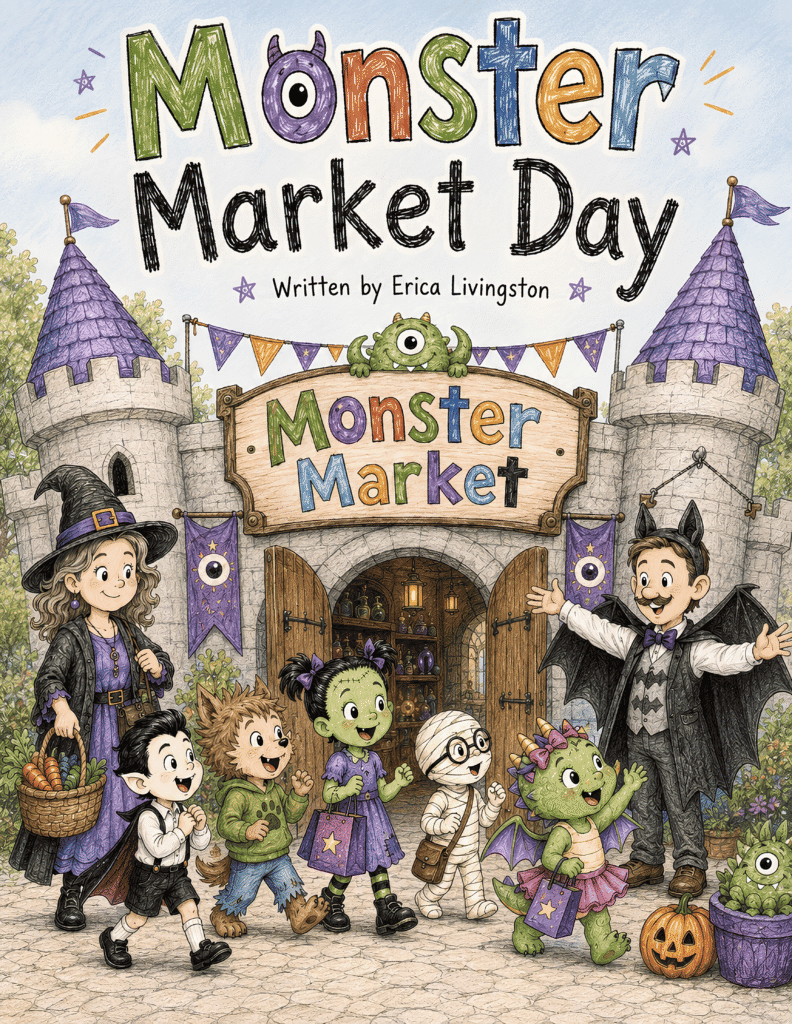
LIVINGSTON: No, it actually came from a game my daughter and I used to play. She ran a magical shop, and I was the customer. I would come in asking to buy things for different monsters and mythical creatures, and she had to figure out what they were based on what I was asking for. We came up with all kinds of silly situations that way, and that game became the inspiration for Monster Market Day.
You write playful rhyming tales. How do you decide whether a story is meant to rhyme before you begin drafting?
LIVINGSTON: Most of the time I can tell pretty quickly. I’ll start playing with the idea in my head, and if I naturally start hearing it in rhyme, I usually go with it. I love the rhythm of rhyming picture books, especially when they’re being read aloud. But I don’t want to rhyme just for the sake of rhyming. The story still has to work.
Rhyme can tempt a writer into choosing the sound over the sense. How do you stop the rhyme from steering the story?
LIVINGSTON: I rewrite it. A lot! If I’m forcing a character to do something just because I need a certain rhyme, then the rhyme isn’t working. I would rather throw out two lines I really like and start over than keep something that doesn’t make sense for the story.
These are read aloud far more often than they’re read silently. How do you test a line for the adult voice reading it at bedtime?
LIVINGSTON: I read everything out loud, and I usually read it to my daughter and my mother too so I can get their opinions. Something can look perfectly fine on the page and sound completely different once you actually hear it. If I stumble over a line or the rhythm feels awkward, I’ll go back and change it. Having them listen helps too, because sometimes they’ll catch something I didn’t.
The Littlest Fairy runs just 26 pages, while Monster Market Day runs 46. How do you decide how long a picture book story deserves to be?
LIVINGSTON: I don’t really start with a page count and try to make the story fit it. The Littlest Fairy and the Dancing Scarecrow is a much simpler story, while Monster Market Day has five monster children who each need their own part of the adventure. That naturally takes more space. I’d rather let a story be the length it needs to be than pad it out or cut things just to hit a number.
Picture books hand half the storytelling to the illustrator. What do you deliberately leave unsaid in the text so the art can speak?
LIVINGSTON: I don’t really think of it as deliberately leaving things out. For me, the illustrations are there to reflect the story and bring what I’ve written to life. I want kids to be able to look at the picture while the story is being read and actually see that moment happening. The expressions, the setting, and all those little visual details add another layer to it, but the illustrations and the words are really telling the same story together.
Which spread or stanza in these books went through the most rewrites, and what finally made it work?
LIVINGSTON: I honestly couldn’t point to one specific stanza because I rewrite so much as I go. Usually the hardest parts are the ones where I know exactly what needs to happen, but I can’t get the rhyme to sound natural. I’ll keep changing words, moving things around, and reading it out loud until I stop stumbling over it. That’s usually when I know I’ve finally got it.
Holly meets two cheerful gremlins rather than frightening ones. Why was it important that the mischief-makers be likable?
LIVINGSTON: The Sock Gremlins were never meant to be scary, but Goody does have a little more of a journey than that. In the first book, he starts out as Greedy, and even his appearance reflects that. I liked the idea that what was going on inside him showed on the outside too. Once he realizes the error of his ways and becomes Goody, his appearance softens along with his personality. By the time Holly meets him, he’s changed. I wanted that transformation to feel visible, not just something the story tells you happened.
The Littlest Fairy is small but brave. What made you want courage, rather than size or strength, to be her defining trait?
LIVINGSTON: Because being brave has nothing to do with being the biggest or strongest person. She can be tiny and still be the one who steps forward. I think that’s especially important for children. You don’t have to suddenly stop being afraid in order to be brave.
The scarecrow in that story dances. What does movement let a character reveal that words can’t?
LIVINGSTON: It makes him playful. A scarecrow is supposed to stand completely still, so having him suddenly dance is the exact opposite of what you expect. You understand something about his personality immediately without him needing to say anything.
Gus, Otis, Ellie, Eddie, and Skye are five distinct siblings. How did you give each little monster a personality a child could recognize?
LIVINGSTON: I didn’t want them to feel like the same character five times. In any family, kids can be completely different from one another, so I gave each of them their own interests, little problems, and ways of reacting to things. Hopefully a child can look at them and think, “That one is me,” or even, “That is definitely my brother or sister.”
Mommy Witch anchors Monster Market Day as a warm, capable parent. Why was a witch the right kind of mother for this story?
LIVINGSTON: It just fit the world. I had all these little monster children, so having their mom be a witch felt natural and fun. But I also liked making her completely different from the scary witch people might expect. She’s just a mom trying to get five kids through a shopping trip without complete chaos—which I think plenty of parents can relate to!
Did any of these characters begin as a real personality, quirk, or habit from your daughter, and how much did you change them?
LIVINGSTON: Not usually as a direct copy of her. It’s more little pieces. Something she likes, something she says, a game we played, or an idea she gets excited about might end up inspiring part of a character. Then once I start writing, that character becomes their own person.
Monster Market Day is about making careful choices and learning from mistakes. Why let the monsters get things wrong on the page?
LIVINGSTON: Because that’s really where the lesson in Monster Market Day comes from. The kids get excited by the things they see and don’t always stop to read all the clues about what they’re choosing. Then they have to deal with what happens because of it. I wanted to show that making a mistake isn’t the end of the world. You can figure out what went wrong, help fix it, and hopefully make a more careful choice the next time. Mommy Witch is there to guide them, but she also gives them the chance to learn from their own choices.
In the market, each child must find one thing they need and may choose one thing for fun. What are you teaching children with that rule?
LIVINGSTON: Mostly that there’s a difference between something you need and something you just really want—and that wanting something isn’t bad. You can still have something fun. It’s just about learning a little balance and thinking about your choices.
A reader called the courage lesson in The Littlest Fairy natural rather than preachy. How do you keep a lesson inside the adventure?
LIVINGSTON: I try to let the lesson come naturally from what the character goes through instead of stopping the story to explain it. But sometimes I do like to have a character speak directly to the reader at the end and put the message into words. Mister Herman does that in Monster Market Day. For me, it just depends on the story. I want the lesson to feel like it belongs there, whether the child understands it through the adventure itself or hears it directly from one of the characters.
Kindness and friendship run through Holly and the Sock Gremlins. How do you make gentle values feel exciting instead of instructive?
LIVINGSTON: By making them part of what’s happening instead of turning them into a speech. The characters have a problem to solve and relationships to build along the way. The kindness and friendship come through their choices, but there’s still fun and an adventure going on around them.
Each of these books contains a small frightening moment, whether chaos in the garden or missing socks. How scary is too scary for ages three to eight?
LIVINGSTON: I think a little bit of “Uh-oh!” is fun. Kids like suspense too. But I always want there to be a feeling underneath it that everything is going to be okay. I’m not trying to give anybody nightmares. I want that little moment of worry that makes them want to turn the page and see what happens next.
Gremlins have supposedly been sneaking into homes for generations. How much of their hidden history have you worked out?
LIVINGSTON: Honestly, not all of it—and I kind of like it that way. I know enough about them to write the stories, but leaving some mystery gives me room to come up with more later. Maybe even I don’t know everything the Sock Gremlins have been doing all these years.
Monsterberry is a whole world of colorful characters. How do you build a place a child wants to return to across several books?
LIVINGSTON: I think it starts with characters they want to see again. Once I finished Monster Market Day, I wasn’t really ready to leave that family either. Now I can take them somewhere new, like Monsterberry Elementary, and introduce more of their world while still having those familiar characters there.
You’ve created series and standalone stories. How do you decide whether a new idea deserves a sequel or a fresh world?
LIVINGSTON: Usually I know because I keep thinking about the characters after the book is finished. If I start wondering what they would do next or imagining another situation for them, there might be another story there. Other times a story feels complete exactly where it ends, and I’m happy to leave it that way. I don’t want to write a sequel just because I can. I want there to be a reason to go back.
A moonlit garden, a magic market, and a laundry room are very different settings. What makes a place feel magical to a young reader?
LIVINGSTON: I think it’s taking somewhere familiar and giving it one unexpected thing. A laundry room is ordinary until there is a Sock Gremlin portal in it. A garden changes completely when the scarecrow starts dancing. I like the idea that something magical could be happening in a place a child might see every day.
You publish independently, from writing to release. What has surprised you most about being the author and the publisher at once?
LIVINGSTON: Probably how much happens after the writing is finished. There’s editing, formatting, covers, descriptions, uploading everything, promotion, social media, and a million little decisions you don’t really think about when you say, “I’m going to write a book.” I work full-time and I’m a single mom too, so sometimes it’s a lot to juggle. But I also really like being involved in every part of bringing the book to life.
You’ve extended Monster Market Day into a coloring and activity book. What do children get from the world beyond the story itself?
LIVINGSTON: They get to do something with the characters instead of just reading about them. They can color them, do the activities, and spend more time in that world after the story is over. I think that’s especially fun for kids who have a favorite character and aren’t quite ready to say goodbye when they reach the last page.
Your merch shop lets readers take characters home in new forms. How does seeing a character on a tote bag change how you see her?
LIVINGSTON: It’s actually really fun because these characters start out as ideas in my head, and then suddenly I’m looking at one of them on a tote bag or a pillow. It makes them feel a little more real. And I love the idea that somebody might like a character enough to want to have them on something they use outside of the book.
Children often demand the same story hundreds of times. What do you hope earns these books that kind of repeat reading?
LIVINGSTON: I hope it’s the characters, the rhyme, and the little things kids start to recognize after they’ve heard the story a few times. I love when a child gets to the point where they know what line is coming next or they have a character they’re waiting to see on the page. If one of my books becomes the one a child keeps pulling off the shelf and asking for again, I can’t think of a much better compliment than that.
Readers can purchase Livingston’s books through the following links:
Author Website/Blog: booksbyericalivingston.com
Redbubble Merch Shop: MerchByEricaLiv.redbubble.com
Printify Merch Shop: merchbyericalivingston.printify.me