
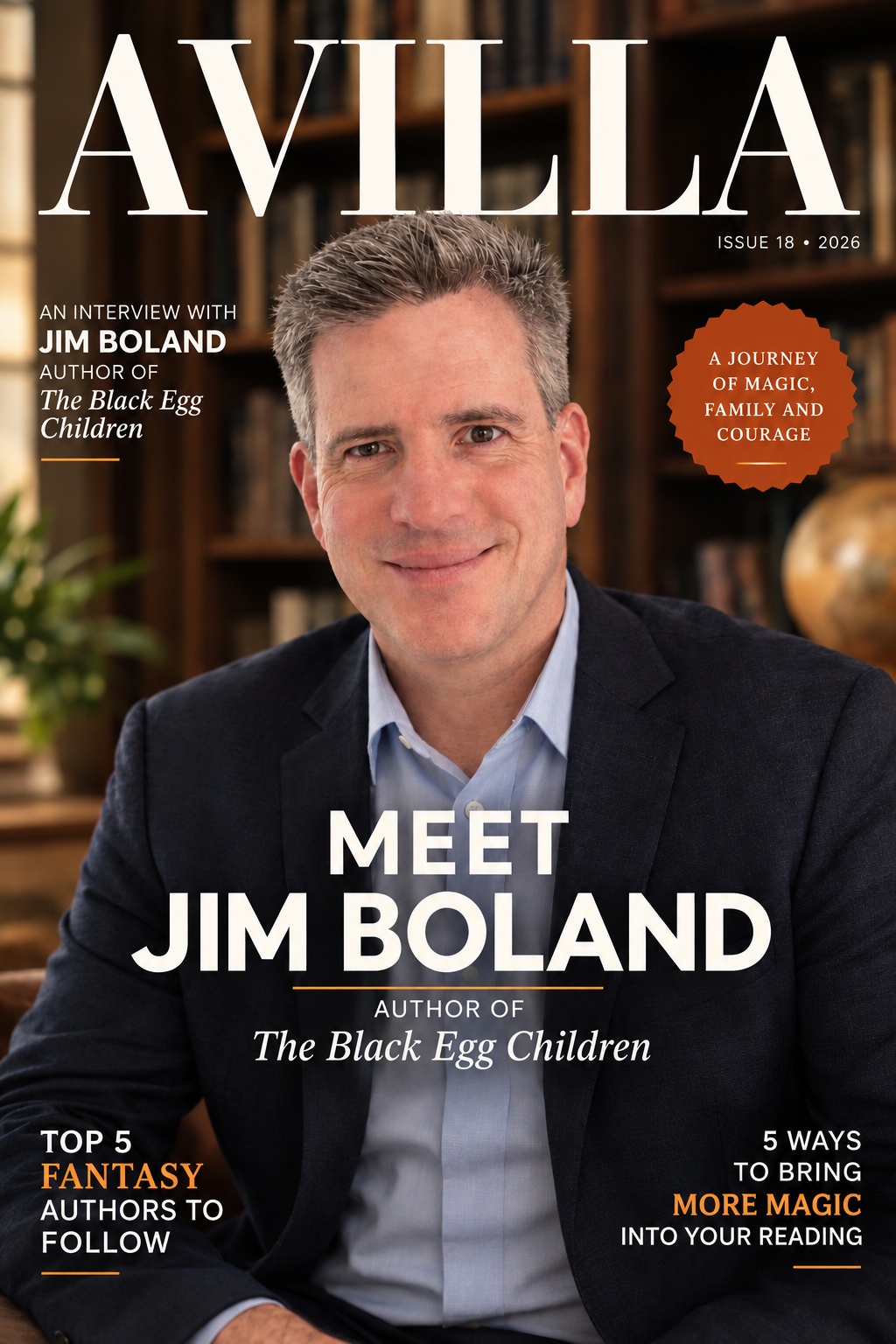
Jim Boland is the author of The Black Egg Children, an imaginative fantasy adventure shaped by a childhood dream of capturing the summer sun in mason jars. What began as an idea for a picture book grew into a full novel, built through online writing courses, more than ten drafts, and the honest feedback of family and friends. Bolland draws on ancient history, folklore, and family heirlooms to hide magic in the most ordinary places, from a kitchen stove to a basement. Through his teenage heroine, Rachel, he explores inheritance, betrayal, manipulation, and the courage to find your own voice. His storytelling blends wonder, humour, heart, and emotional honesty to create a world young readers can make their own.
By Dr. Chikodi Olasode • Issue 18, October 2026
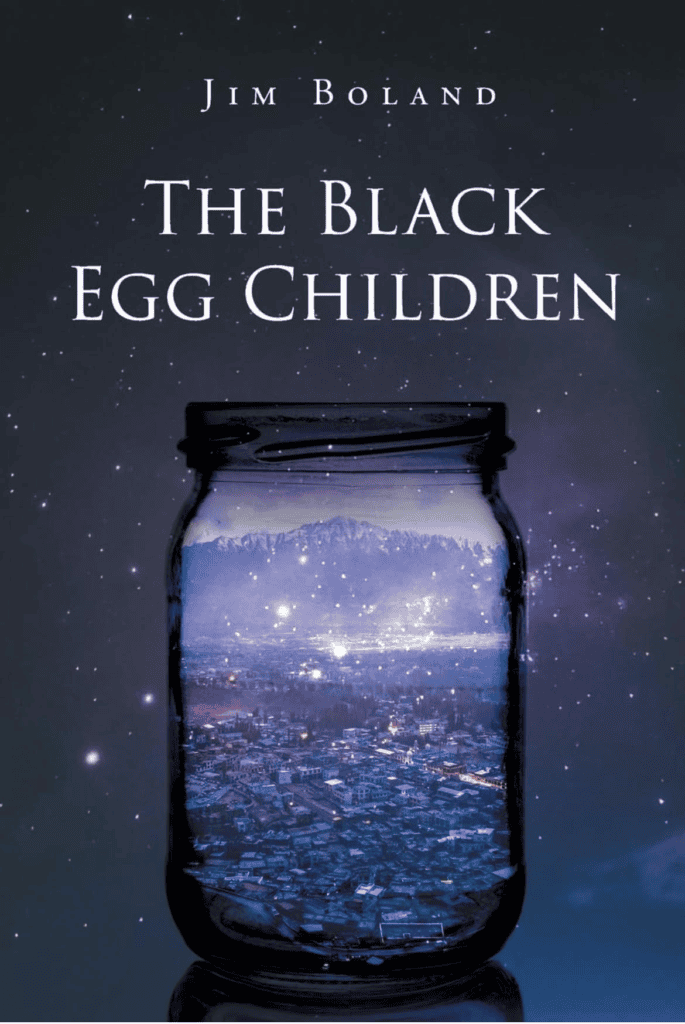
Rachel becomes the next Earth Cosmos Case Manager by inheritance rather than by choice or aptitude. What made you want to write a hero who doesn’t earn her power so much as receive it?
BOLAND: I wanted the story to explore what it feels like for a teenager to be caught between destiny and the desire to choose her own path. Rachel inherits enormous responsibility, but she doesn’t necessarily feel ready for it. She must figure out who she is while also deciding whether she is willing to accept the role that has been handed to her.
You house this magic inside kitchen tools, a basement stove, and mason jars rather than any traditional fantasy trappings. Where did that specific image come from, and how early in your process did it arrive?
BOLAND: I remember that when I was a child, I wanted to capture the summer sun in mason jars so I could open them on cold winter days and bring some summer warmth back. That childhood idea stayed with me and eventually found its way into the story.
The idea developed as I was mapping out the storyline. Originally, The Black Egg Children was going to be a picture book, but as I began writing, it became apparent that the story was much bigger and needed to be a novel. I had always wanted to become a writer, so I took online classes on plotting, developing subplots, and building characters. Those classes helped me turn an idea that began with a simple childhood image into a much larger story.
The four seasons live inside jars as spirits Rachel must learn to direct. How did you work out the internal logic of that magic system before you trusted yourself to write scenes with it?
BOLAND: I revised the draft more than ten times, and each time I went through it, I added something new to each chapter. I also shared the story with family and friends and asked them to read and review each chapter. Their feedback helped me see what was working and what needed more development.
I wanted the magic to feel fresh, humorous, and fun while still making sense within the world of the story. Rewriting the draft so many times helped me develop the rules of magic and become more confident in how Rachel interacted with the four seasons.
You set a two-thousand-year legacy inside a very ordinary American Midwest household. What did grounding something that ancient in something that domestic allow you to do as a writer?
BOLAND: I wanted ancient history to feel connected to everyday life. Before writing about those cultures, I did a lot of research and tried to learn as much as I could about their history, folklore, and customs. I didn’t want to make assumptions about their cultures or traditions and accidentally get something wrong in my story.
At the same time, placing this ancient legacy inside an ordinary Midwest household allowed me to mix the unexpected with the familiar. I liked the idea that something thousands of years old could exist quietly in a basement, a kitchen, or a home in Wisconsin without anyone else realizing how important it was.
Rachel is a teenager first and a cosmic guardian second. How did you calibrate her voice so the weight of her inheritance never flattened her into simply the chosen one?
BOLAND: I wanted to show whether she really wanted this role and what her options were. She asked questions and even tested her grandmother’s strength and ability to believe in her. Rachel’s self-esteem became unstoppable as she realized her power and was accepted by her true family.
The betrayal in this story comes from people Rachel trusted, not from an outside villain. Was that always the shape the conflict would take, or did an external antagonist ever compete for that role in early drafts?
BOLAND: Originally, Rachel had an outside villain—an entity from one of the jars that wanted to take control of the Earth. As I developed the story, though, I thought it would be more shocking and emotionally powerful if the betrayal came from someone within Rachel’s close-knit family. I felt that kind of conflict would make the story more relatable to young readers. As children grow into adults, they learn how to deal with conflict and difficult relationships in their own lives. I wanted readers to be able to connect with Rachel as a person and understand what she was experiencing, rather than simply seeing her fight a monstrous villain who came out of a jar. For me, the family betrayal made the conflict more personal and gave Rachel more emotional challenges to overcome.
Rachel’s arc turns on discovering that the adults closest to her are capable of manipulating her to maintain control. What is it about that particular betrayal—from inside the family—that interested you more than betrayal from an enemy?
BOLAND: When the people you trust begin manipulating you or turning people against each other, it can create anger, spite, distrust, and an incredible sense of internal chaos.
But I wanted Rachel to discover something important through that experience: she couldn’t always control what other people did, but she could learn to trust herself. Becoming stronger meant finding her own voice, recognizing manipulation, and having the courage to make her own decisions. For Rachel, that betrayal ultimately becomes part of her journey toward independence.
The fellowship Rachel builds includes two talking ravens and an enchanted swordsman. How did you decide on that specific combination of allies, and what did each one need to bring that the others couldn’t?
BOLAND: The swordsman brought strength, courage, and knowledge of the sea around him. He understood the dangers Rachel was facing and could protect her. The ravens brought something completely different. Because they could fly, they could travel over the water and return with information about what was happening around them. They could even spy on enemy ships without anyone realizing that they could talk.
I wanted each ally to have a different purpose. The swordsman provided protection and knowledge, while the ravens provided information and a way to see what was happening from above. Together, they gave Rachel a fellowship that balanced strength, wisdom, and trust.
Writing talking animal characters alongside a more traditional fantasy figure like the swordsman is a tonal balancing act. How did you keep the ravens from tipping the book into whimsy when the story is carrying real weight elsewhere?
BOLAND: Humor is one of the ways people cope with fear and difficult situations. I wanted the ravens to carry some of that humor when the story became serious and heavy. The ravens weren’t there to take away from the seriousness of the story. Instead, they helped balance it. Sometimes, when life feels frightening or overwhelming, a little humor can make it easier to keep going. I used the ravens to bring some light into those difficult moments.
Rachel’s power directly controls weather and the rhythm of life. What was the biggest technical challenge in making magic of that scale feel personal rather than abstract on the page?
BOLAND: There is a scene where Rachel loses the jar of Winter. That jar is essential because it helps her change the season from winter to spring, so losing it could have affected the entire Earth. I wanted that enormous consequence to feel personal rather than abstract. I approached it almost like someone losing their wallet or keys—the kind of everyday mistake that can suddenly create a much bigger problem. I wanted an Earth-changing event to begin on a very human, everyday level. That helped keep Rachel’s enormous responsibility grounded in something readers could understand and feel.
The story ends with Rachel reclaiming her voice, her future, and her magic—in that order. Was that sequence something you planned from the outset, or did it reveal itself as you wrote toward the ending?
BOLAND: It revealed itself toward the end of the story. As Rachel begins to escape the toxic people and relationships in her life, she starts to understand that reclaiming her power also means reclaiming her own life. Her voice, her future, and her magic become connected.
Grandmothers, inherited objects, and family secrecy all carry real narrative weight here. Did a specific relationship or memory of your own feed into how you wrote the guardianship between Rachel and her family?
BOLAND: My mother had an ancient jade vase that had been passed down through many generations on her side of the family. Her father was Buddhist, and the vase was said to bring good luck to whoever owned it. The idea of an ordinary object carrying generations of history and meaning stayed with me when I wrote The Black Egg Children.
My mother has since passed away, and I now have the vase. In a way, I feel that its luck has followed me, but I also feel that I have become the protector of this small vessel and the history that comes with it. That feeling of being entrusted with something from previous generations helped shape the relationship between Rachel, her family, and the mason jars she is responsible for protecting.
This is a coming-of-age story wrapped inside a fantasy adventure. Which of those two engines did you draft first—did the magic system come before Rachel’s emotional arc, or the reverse?
BOLAND: Rachel’s emotional journey came first. The magic developed from her character. I based Rachel on my real-life friend, Rachel, who is one of the strongest people I have ever met. She is a peer counselor and has extensive knowledge about narcissism and the effects of toxic relationships. I drew on what I learned from her when developing Rachel’s experiences and emotional journey. Once I understood who Rachel was and what she needed to overcome, the fantasy elements and magic system began to take shape around her.
Writers of magical-realist fantasy often face a choice between over-explaining the rules of their world and leaving too much unsaid. Where did you land on that line, and did your answer change during revision?
BOLAND: I realized about halfway through the story that I didn’t want the plot to be predictable. I wanted to create a twist that would genuinely surprise the reader, so I went back and rewrote several chapters. I had Rachel ask questions that went unanswered, hoping readers would come up with their own solutions.
The world is described as teetering on the edge of collapse by the final act. How did you pace the escalation from a personal, family-centered story into something with planetary stakes?
BOLAND: I used rising action throughout the story. Each event builds on the one before it, gradually increasing the excitement and the consequences for Rachel. I wanted the story to begin with problems that felt personal and familiar before expanding into something that could affect the entire Earth. At the same time, I wanted readers to see that everything is interconnected. Rachel’s personal choices and struggles become connected to the world.
Was there a version of this book where Rachel’s powers were never misused by someone close to her—a gentler draft—or was that betrayal built into the premise from the very beginning?
BOLAND: Halfway through one of the early drafts, I realized I didn’t want the story to be predictable. I wanted to create a twist that would genuinely surprise the reader, so I went back and revised several chapters, thoughtfully adding foreshadowing throughout the story.
What authors, books, or even non-literary influences shaped your instinct to root cosmic-scale fantasy in something as unglamorous as a basement stove?
BOLAND: I wanted the magic in the story to come from something ordinary, like a kitchen stove. To me, magic doesn’t always need crystal balls, spell books, or elaborate magical objects. I liked the idea that something completely ordinary could hold incredible power—and that someone who didn’t know its secret might walk right past it without giving it a second look. I wanted the magic to feel hidden in everyday life.
Middle-grade and YA fantasy both carry different expectations for how directly you can address themes like control and manipulation. Which readership did you have most in mind while writing Rachel’s story?
BOLAND: I wanted the story to be fun, adventurous, and magical without becoming overly scary. As we grow into adulthood, we all have different experiences and interpret stories around us differently. I would like young readers to be able to interpret it based on their own life experiences.
Looking back at your draft process, what was the hardest scene to get right—the one that changed the most between your first version and the one readers now have?
BOLAND: I had to improve my battle scenes, so I took an online class and read books such as The Lord of the Rings, Harry Potter, and The Lion, the Witch and the Wardrobe to learn how to write them. I rewrote this chapter several times and even took a month-long break from it so I could come back with fresh eyes. One of my biggest challenges was figuring out how to end the battle in a way that felt believable and satisfying. I eventually realized that I needed to strengthen the foreshadowing earlier in the story. I went back and rewrote several scenes near the beginning so the events in the final battle would make sense and feel earned.
The ending restores balance rather than closing the story off entirely. Did you always intend to leave the door open for more of Rachel?
BOLAND: Yes. I would like the sequel to grow with Rachel as she becomes an adult. I think it would be fascinating for readers to see how her responsibilities, relationships, and her life as an Earth Cosmos Case Manager develop as she gets older.
You can order Bolland’s book, The Black Egg Children here: