
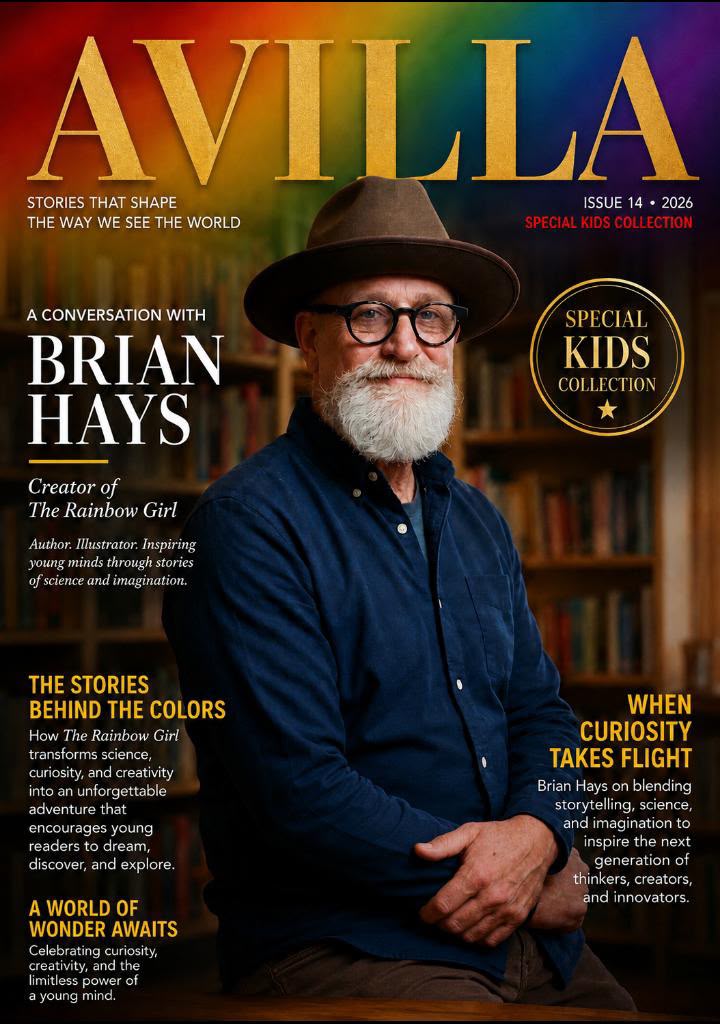
The Rainbow Girl is such a visually vibrant and emotionally striking title. What was the first image, idea, or feeling that inspired this story?
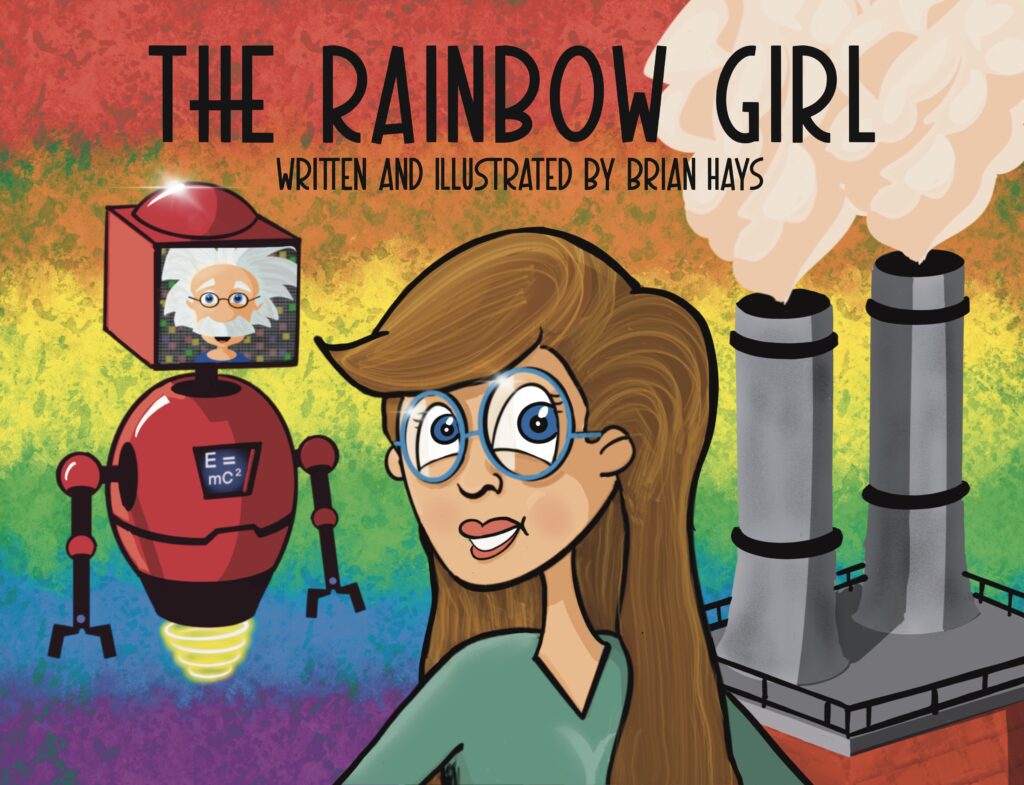
The birth of my grandson inspired me to begin writing children’s books. Then, when his sister came along, I wanted to write a book about a young girl who changed the world. I wanted to empower young girls and educate children about climate change. “The Rainbow Girl” was the perfect title for the innovative teenage girl who created rainbows all over the planet.
The book blends imagination, science-fiction imagery, and symbolism through color. What does the “rainbow” represent philosophically for you as a writer and illustrator?
As the Clean Air Pods cleanse the air and rainbows pop up all over the world, I think they represent hope!
You chose to both write and illustrate the book yourself. How did the visual storytelling shape the narrative, and did the art ever change the direction of the story?
I’ve always enjoyed drawing, and over the years I’ve dabbled with developing characters. The idea of adding a storyline to my drawings was secondary. The book did not start out as The Rainbow Girl. I got to the point in the story where Olivia and Albot are testing the Clean Air Pod that converts greenhouse gases into oxygen. I drew the car exhaust going into the Clean Air Pod. But the oxygen coming out was visually lacking. It looked so boring. My wife and muse, Johanna, suggested “it needs to be a rainbow”! And the Rainbow Girl was born!
There’s a fascinating contrast between innocence, creativity, and industrial imagery on the cover. Were you intentionally exploring tensions between humanity, technology, and the modern world?
In a sense. I have always felt it was important for children to receive the message that they can impact the world they’re a part of, and that their imagination can be an imperative part of that. I wanted to write a fun book that empowered young girls and create some awareness about climate change at the same time.
What themes did you most want young readers and even adult readers to take away from The Rainbow Girl?
I think it can be difficult to grow up in today’s world. I believe that children are affected by the news, even if indirectly. I want every young reader to realize that they have their own talent and to dream big! As Denis Waitley (the inspirational speaker and author) said; “Imagination + Innovation = Realization”.
The illustrations have a playful yet thought-provoking quality. Which artists, writers, or creative influences helped shape your artistic style?
I had a few inspirational influences. Charles Schultz was an early influence for me, and I used to copy his characters as a boy. In more recent times, I have been intrigued by Albert Einstein, who was a fascinating mix of creativity, innovation, and science .
Did any personal experiences or moments from your own life find their way into the character of the Rainbow Girl?
Not specifically Olivia, but I have been told that the each of the robots display parts of my personality. I guess it just happened unconsciously. Does that mean that my sense of humor is annoying???
Many children’s books avoid difficult or complex ideas, but this one seems unafraid of deeper symbolism. Why do you think it’s important to introduce children to layered storytelling?
That’s real life, isn’t it? It is vitally important to bring awareness to climate change and the efforts to mitigate it. Our country has regressed greatly in both of these areas. I could not think of a bigger (or better) backdrop to serve as the challenge for our young protagonist.
What was the most challenging part of creating this book: developing the narrative, creating the illustrations, or balancing both at once?
The storyline was certainly challenging. I wanted to show Olivia’s maturation from a young girl who creates robots to make her breakfast, clean her room and entertain her friends, to a teenager who now has an awareness of the world around her and wants to help improve it. I then added an educational piece to explain climate change. At the same time it all needs to be fun and the illustrations need to be engaging! So, it definitely felt like a balancing act.
The book appears to celebrate individuality and imagination. In today’s world, how important do you think stories like this are for younger generations?
Albert Einstein talked about imagination a lot. He said that “Imagination is the preview of life’s coming attractions!” I think it is important for young people to let their imaginations be their guide. Then put those ideas into action! In addition, it takes courage to express individuality, so I felt it important to highlight that as well.
Was there a particular scene, illustration, or moment in the book that affected you emotionally while creating it?
BRIAN: I felt connected to the part of the story when Olivia wins the award in the science fair, because it validates her talent and motivates her to continue.
Your creative process seems highly visual. When beginning a project like this, do you start with images, characters, themes, or dialogue first?
That’s a great question. I start with a loosely formulated idea of the storyline. Then, I actually start drawing until I feel like I have landed on something. I struggled drawing the robots because everything looked like it came out of Star Wars. I had the thought to utilize household items. That freed my brain up to to draw something that looked original. Then it was easy to draw the evolution of her robots as she became more skilled in building them.
What advice would you give to aspiring authors or illustrators who want to create stories that are both meaningful and visually distinctive?
I use Procreate on my iPad to create the books. However you want to do it, just jump in! Do a couple digital books and share them with family and friends. As your skills sharpen either self-publish or find a publisher. Again, just go for it!
If readers could walk away from The Rainbow Girl with one lasting emotional or philosophical insight, what would you hope it would be?
Find something you care about and go for it!
Finally, where can readers purchase The Rainbow Girl, and are there any upcoming projects or future stories you’re currently working on?
It can be found on Amazon, Barnes & Noble, Apple Books and Google Books. I have a book coming out this summer titled, Milo,The Misunderstood Monster. You can find all of my books on my website, brianhaysbooks.com