

Introducing…
Miguel R. Balfour is an award-winning author and practicing medical doctor whose writing bridges the worlds of medicine, suspense, and imaginative storytelling. Remarkably known for his Literary Titan Gold Book Award-winning thriller, The Trident Code, Balfour has established himself as a compelling voice in high-stakes fiction, weaving together espionage, psychological tension, and maritime intrigue. Alongside his thriller writing, he is also the author of the poetry collection The Poetry in My Head, revealing a creative range that spans both pulse-racing narratives and introspective verse. Based in Indiana with his wife and daughters, Balfour draws inspiration from classic thriller traditions, bringing influences from espionage fiction and action-driven storytelling into his own distinctive work. In this interview, we explore his creative process, literary inspirations, and the balance between life as a physician and novelist.
How does the author turn environment into character rather than just background?
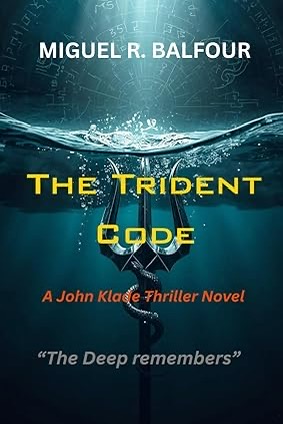
Great question. For The Trident Code specifically, I needed to make the mood an immersive experience. As the main driver was the sea, I needed to make most scenes depict that quality of “wetness”, so I intentionally made the weather mostly wet and rainy. That was repeated throughout the book, and as such the sensation of water as a part of most scenes became very evident after even a third the way through the novel.
How is tension maintained even in stillness or silence?
That is a work of art in and of itself. There is a definite technique to doing it. This can be by simply raising the stakes, or even withholding information, leaving a sort of cliffhanger at the end of a chapter, adding new conflict, building emotional tension, or even simply adding time constraint. The idea ultimately is to keep the reader uncertain, invested and eager to continue reading.
How does the writer balance precision and restraint in description?
The key is to realize that at times, less is more. I try not to make a passage get bogged down with too detailed a description. Efficiency of words is the goal. If I can explain something thoroughly without being to “wordy”, then that keeps the pace of the writing rather than slowing it down.
How are characters revealed indirectly through behavior instead of exposition?
That is achieved through indirect characterization. The key is consistency. For example, a way that my protagonist’s thoroughness is revealed is through his constant attention to details. If that is always the case, it invites the reader to infer that he is disciplined, structured, and it makes the narrative more immersive and engaging, inviting the reader to actively participate in understanding the character.
In The Trident Code, Klade operates with a very controlled, almost clinical worldview shaped by his military past. How did you approach building his psychology so that readers can both understand and question his moral detachment?
I wanted a character that was actually not perfect, and relatable. As a military person, however, there will be some things that will be consistent. His sense of control and order, as seen by his home setting, are akin to what one might expect of any military person. Psychological issues, however, will be another thing altogether. He, like most military people, has deep personal/psychological issues that may not manifest on the surface, but may manifest beneath the exterior of control, as his character gets more developed throughout this novel and the rest of the novels in the series.
The recurring trident-and-serpent symbol feels both mythological and modern, almost like a bridge between ancient archetypes and contemporary covert operations. What inspired this symbol, and what does it ultimately represent within the story’s larger themes?
Great question. Before I started the series, I did some research on things related to the Navy. Interestingly, the Trident, as a symbol, is not necessarily foreign to the Navy. But I put a significant spin on it. Without giving away too much, since the “Trident” as a concept does evolve over the 4 books in the series, the Trident is initially thought to be mythical, a religious symbol. But by the third book of the series, the question is asked, if it is mythic or manmade. Taking it to a deeper level, as will be seen as one reads through the series, it was a resonance technology initially devised for medical purposes, to help Alzheimer’s patients and patients undergoing brain surgery have a chance of retaining, or “getting back” memories that would otherwise be lost. But the technology becomes weaponized, to create “perfect soldiers”, and to make humanity less “autonomous”. And by the way, adding the serpent was my “medical” spin on things, a nod to the Rod of Asclepius, the universal symbol of medicine and healthcare, since I am a physician.
The novel blends noir detective elements with military thriller pacing. How did you balance those genres in terms of tone, especially in scenes that shift between quiet surveillance and underlying violence?
It was easy to balance the two as these are the genres I read a lot. My version is a fusion of the two, and I lean towards the one that suits a particular scene based on what is happening in the story at a specific point. There is always a time and place for each, though sometimes the two will inevitably intersect. Since my protagonist is a former Navy SEAL, there really is no getting away from that military thriller aspect, but I do like the more introspective, intellectual side of things, which I think really balances out his character and makes him more relatable.
There’s a strong sense that the past—particularly Klade’s Navy history, is an inescapable force shaping present events. Were you aiming to explore trauma, loyalty, or inevitability as the core theme, and how did that influence the unfolding mystery?
Absolutely, and as noted in the last question too. The past is a crucial part of the series as a whole. Many themes are explored over the four-book series, from trauma, to loyalty. Difficult to say more without giving away too much, but that is the basic idea.
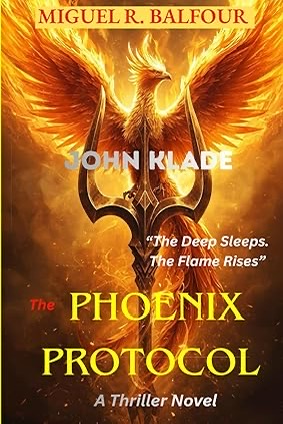
In The Phoenix’s Protocol, Klade’s “Sentinel Retreat” is both a sanctuary and a fortress, reflecting his psychological state. How did you design this environment to mirror his inner conflict between seeking peace and preparing for constant war?
Klade’s military past tends to shape much of his life. I created a character who is not paranoid, but hypervigilant. As he has transitioned from military life to civilian life, working as a Private Investigator, my aim was for him to be successful in his new role, enough to be able to afford the degree of security that his “Sentinel Retreat” affords him. Also, part of his back story is that he was not merely a SEAL, but he was also part of Naval Intelligence, so anything that seems clandestine will become a narrative part of his new life. He cannot go back. He must be vigilant. The nature of his new job can sometimes be unpredictable, dangerous at times. Having a safe haven gives him some peace of mind and allows him to carry out some of his investigative work without worrying too much about divulgence, when confidentiality is key.
The evolution from the trident symbol to the phoenix intertwined with it suggests a shift in ideology. What does this transformation represent about the Brotherhood’s motives, and how does it reshape the stakes compared to your earlier work?
I think the question answered itself. It is indeed an evolution in ideology of sorts that drives the series from The Brotherhood of The Trident Code to The Order of The Phoenix Protocol. What the water was unable to do, the “new” philosophy is that the fire will purify. It still means, however, that the idea with regard to the symbology is that it is still more mythical/religious than man-made, and this idea, as previously noted, will actually evolve by the end of the series. Note should be made that the Trident itself is ALWAYS part of the symbology, and the evolutions to come will always have that as its base, with things actually added to the symbology.
Much of the tension comes from Klade’s isolation and hyper-vigilance, where even silence feels threatening. How did you approach writing suspense in such controlled, quiet settings without relying on constant action?
I think my mindset is the first clue to that question. As a medical physician, I am used to working in “controlled chaos”, with patients having varying degrees of ailments and varying degrees of emergency needs. I have to be the calm to sooth staff and patients alike. I transfer this philosophy to my writing. I consider my writings to have adrenaline with an intellectual edge, and the latter tends to make my protagonist more introspective, deep. I intentionally made Klade a brilliant mind. He knows when action is needed, and when intellect is preferred. Also, I tend to make him more conscientious and even when there needs to be action, more often than not, his intention is more to subdue/incapacitate rather than kill.
Klade is written as both hyper-controlled and increasingly destabilized, especially through physical cues like tremors and sensory hyper-awareness. How do you calibrate those internal fractures so they evolve naturally without breaking the character’s core identity?
It is done as part of the evolution of the series. Without giving away too much, as the series moves along, the destabilization actually becomes more pronounced, and escalates, but the escalation is exactly in keeping with the overall development of the story. Thus, we move from Klade balancing control and destabilization to the latter overpowering the former as we get to books 3 and 4. But again, this is all in keeping with the evolution of the story and as such the change is in line with the pacing of the story.
Across the series, environments like the Sentinel Retreat or the fortified library-office, feel like extensions of Klade’s psyche. What is your process for designing settings that simultaneously function as physical spaces and psychological landscapes?
My process is simple. I want to show that Klade compartmentalizes some aspects of his life, like he does his very home. He is compartmentalizing certain psychological trauma that he initially is unable to process, as he is not even sure if they are real or manufactured, influenced by the resonance technology now being used as a weapon. Of course, with time, he gets to realize that he was brainwashed, so that things that actually happened were made to seem like they “never happen.” He has to compartmentalize, certainly early in the series, to navigate the potential psychological ramifications of past actions. Eventually, he realizes that the memories are actually real. He actively tries to re-construct these memories for a better understanding of his past, and as that progressed, he becomes less compartmentalized as the series evolves.
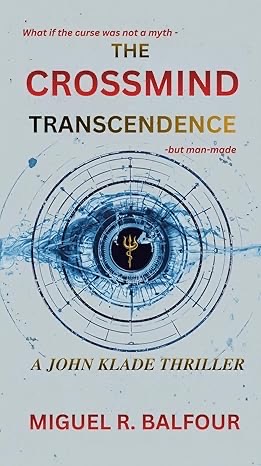
The mythology of the Brotherhood, Leviathan, and now the “Crossmind” evolves with each installment. How do you expand a fictional system of symbols and lore while maintaining internal consistency and avoiding exposition overload?
That was not a very easy task. I think if the series was longer than 4 books, the risk of exposition overload would have been more likely. But by keeping it simple, defining the problems to explore in each installment, and getting to a quick conclusion/resolution/full circle, within reason, that became less of an issue.
Annabelle Johansson enters with emotional history, intellectual authority, and narrative urgency all at once. How do you introduce a character with layered backstory in a way that feels immediate and dynamic rather than info-heavy?
Some of that achievement is luck, honestly. Before I started the series, I had been reading lots of Lee Child’s Jack Reacher series as well as Dan Brown’s works on Code and Symbols. I love both the adrenaline part of the Jack Reacher books but also love Code and Symbols mystery. As a result, I felt a need to combine the two, essentially creating my “own lane”, where adrenaline meets intellect. But of course, Klade is military, so I had to introduce someone who had a great understanding of Codes and Symbols. So, the question became, “why not get another protagonist to work alongside Klade?” That person has to have authority, must be believable. So, I created someone who grew up watching her brilliant father, and aspiring to be like him, becoming what he was workwise, and not having to force the story. And that is how Annabelle Johansson was created!
The world-building blends hard military realism with mythic and almost cosmic elements (signals, deep-sea consciousness, ritual symbols). How do you balance technical plausibility with ambiguity so the story remains grounded while still feeling expansive and uncanny?
It is a delicate balance. During the writing process, I considered which concepts might be excessive to include in the narrative. Honestly, the third book of the series, The Crossmind Transcendence, leans heavily on techno-thriller, and I was very nervous about that, since my original intention was to keep things simply military with Code and Symbol mystery, but the reception for the third book has been good, which means the question I asked myself while writing it was a great one to ask, because it added a degree of restraint in the writing. I wanted things to still be potentially plausible, even if the concept seems farfetched for our current times.
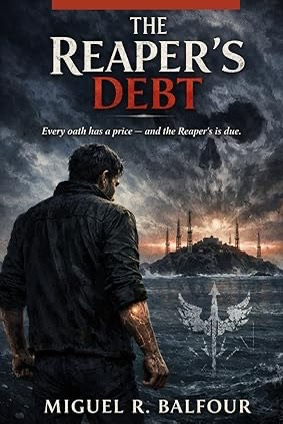
The world-building in The Reaper’s Debt introduces a fusion of advanced technology (like the resonance detector) with mythic and symbolic elements (Leviathan, the hybrid AI, ritual markings). How do you ensure that these elements feel cohesive rather than competing, and what rules guide the limits of this world?
Actually, all the elements in The Reaper’s Debtwere introduced in the previous books, some gradually, excepting for the resonance detector. In and of itself, the resonance detector would not compete with any of the other elements, and it was a great addition to the series as it helped the characters navigate the landscape where the resonance technology has become weaponized, and these resonance detectors are themselves derived from the same technology that created the resonance technology in the first place.