
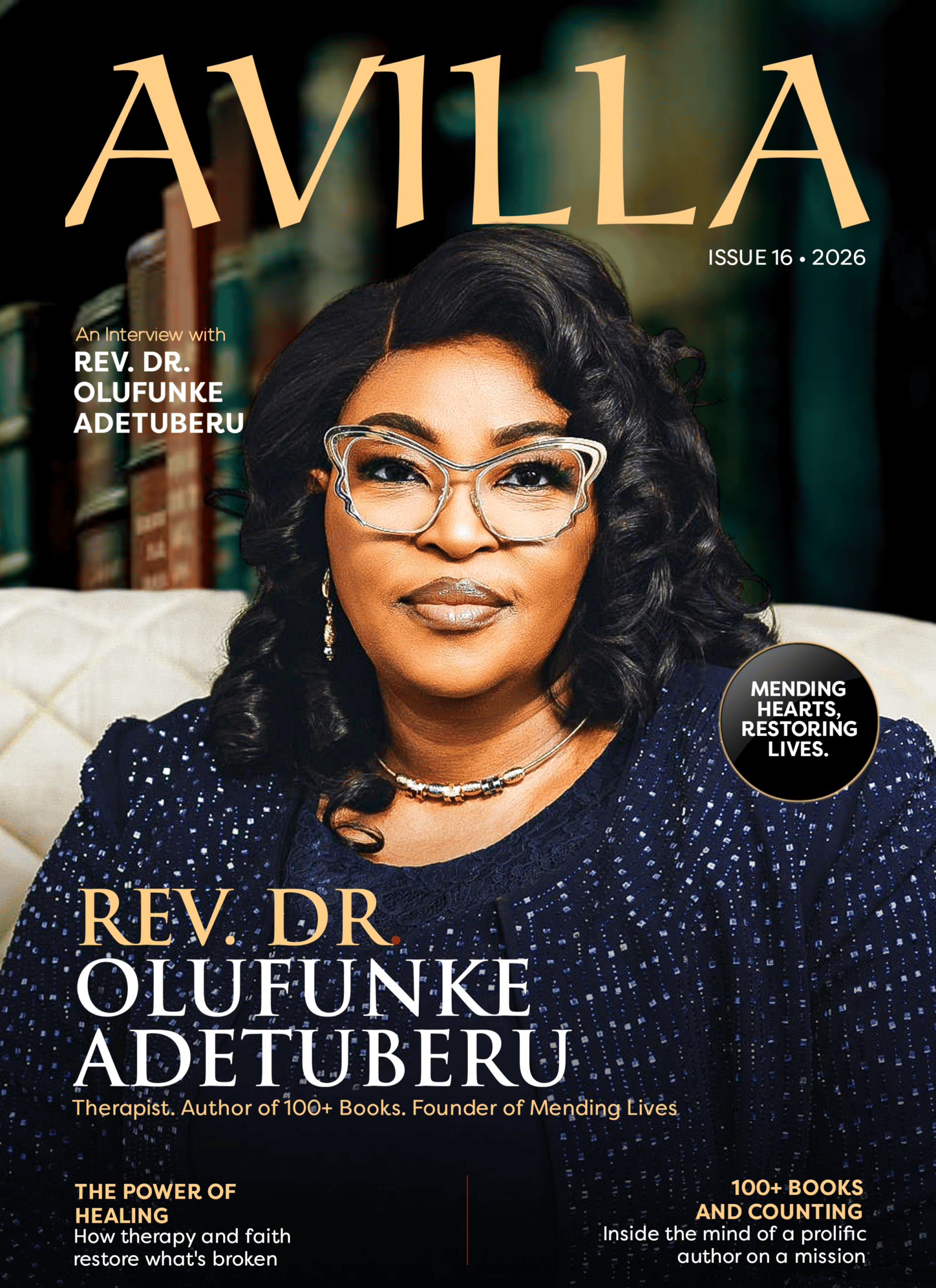
The Woman Who Chose Not to Waste Her Wounds
Inside Rev. Dr. Olufunke Adetuberu’s long argument for healing: from a childhood marked by absence and emotional pain to a life built around therapy, ministry, writing and the difficult work of helping people understand themselves.
By Dr. Chikodi Olasode • Issue 16 August 2026
MENDINGLIVES
MendingLives describes its work as compassionate mental-health care designed to help people understand, assess and take control. Its current website highlights confidential and secure care, professional therapy, flexible sessions, personalised support and screening assessments.
Official website: www.mendinglives.ng
“At the core of everything I do, my calling is very clear—I am here to heal, build, and raise people who are mentally, emotionally, and psychologically sound.”
THE INVISIBLE HEALTH CRISIS
There is a particular kind of authority that cannot be acquired from a title alone. It comes from having spent enough time close to human pain to recognise its disguises: the anger that is really fear, the addiction that began as escape, the relationship conflict that has its roots in childhood, the outward success that conceals an inward life still asking to be seen.
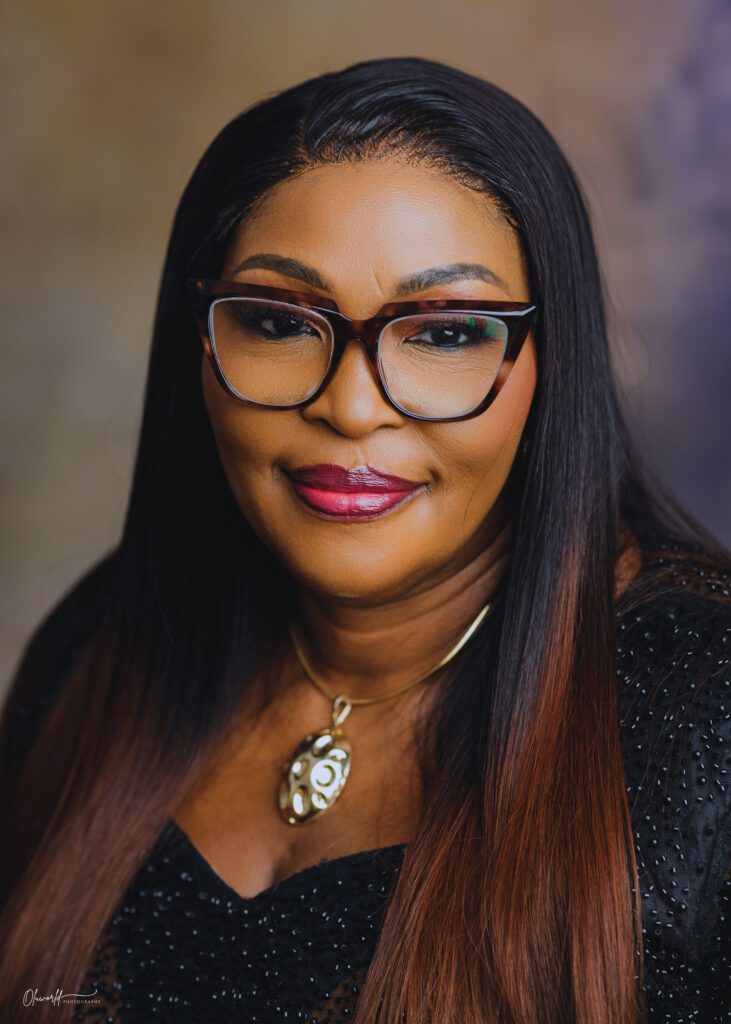
Rev. Dr. Olufunke Adetuberu has built her work around that recognition. A preacher, therapist, counselor, author, life coach and public voice on relationships and emotional wellbeing, she has spent decades asking Nigerians to look beneath behaviour and search for the wound underneath it.
Her professional life is wide-ranging, but the argument beneath it is remarkably consistent. People carry histories—family systems, disappointments, unmet needs, learned behaviours, trauma, beliefs and coping mechanisms. Those things follow them into marriages, workplaces, ministries and leadership unless they are deliberately examined.
She argues that mental and emotional health must be treated with the seriousness given to physical health. Stress, addiction, conflict and broken relationships can be signals of deeper problems that have been normalised rather than addressed.
“Dysfunction has been normalised in many spaces. What Nigeria needs now is deeper education, deliberate advocacy, and a cultural shift that treats mental health with the same urgency and importance as physical health.”
A WOUNDED HEALER
The most intimate part of Adetuberu’s story is also the part that explains the architecture of her work. She describes herself as a “wounded healer.” Her parents separated when she was six months old, and she grew up without a father figure. She describes an upbringing in which emotional safety and stability were scarce.
Her mother, carrying her own pain, was emotionally overwhelmed, and some of that pain reached the child. There were experiences of feeling unwanted, unvalued and unseen. Like many people who grow up without a secure emotional foundation, she says she later looked for love and validation in places that could not reliably provide either.
She once received a medical prognosis that, she says, suggested she might never have children. She later became a mother, an experience she understands as another chapter in a larger story of restoration.
“Instead of allowing my story to define me, I allowed it to refine me.”
Her history did not become a credential. It became a question: what happens when wounds are understood rather than simply endured? That question became the bridge between her personal healing and her professional calling.
THE MENDINGLIVES IDEA
MendingLives grew from the conviction that healing should move beyond emergency response. Adetuberu describes its focus as helping individuals and families dealing with addiction, anger and impulse-control difficulties, trauma, personality challenges and relationship breakdowns, while helping couples understand compatibility and relational dynamics.
The current MendingLives website presents a therapeutic model built around confidential care, flexible sessions, personalised support and structured screening assessments. It lists personality, compatibility, gambling, comprehensive substance-use, psycho-sexual and trauma assessments.
But the idea she returns to most forcefully is screening. “We do not treat without screening,” she says.
For Adetuberu, screening is the difference between guessing and understanding. A visible problem may be only the surface expression of a deeper pattern. Assessment asks what lies underneath: personality, trauma history, emotional triggers, behavioural tendencies, vulnerabilities and relational dynamics.
“You cannot effectively heal what you do not clearly understand.”
THE FAMILY AS THE FIRST CLASSROOM
Adetuberu’s understanding of healing is inseparable from her understanding of the family. She sees the home as one of the earliest places where people learn what love feels like, what conflict looks like, whether vulnerability is safe, and whether correction means rejection or growth.
Many adults, she argues, attempt to solve present-day relationship problems with tools learned in childhood. A person who learned silence may withdraw. A person who learned that love must be earned may overperform. A person who grew up around volatility may mistake instability for intensity.
“Most relationship conflicts are not about the present—they are rooted in unresolved past patterns.”
For her, marriage is not sustained by feelings alone. It requires emotional intelligence, compatibility, psychological awareness and intentional growth.
WHEN FAITH MEETS THERAPY
Adetuberu occupies a distinctive space in Nigeria’s mental-health conversation because she does not approach therapy from outside faith. She is a minister, yet she argues strongly against reducing every psychological struggle to a spiritual problem.
Her position is one of integration. Faith can provide meaning, community and hope; therapy can provide structured psychological intervention. “Therapy is not in competition with faith,” she says.
She believes churches can become gateways to deeper healing because they are often among the first places people turn when life begins to collapse. Faith communities can educate members, create safe spaces for disclosure and refer complex cases to trained professionals.
“Prayer is powerful, but healing also requires responsibility, insight, and structured intervention.”
THE WRITER WHO WANTS TO DIE EMPTY
Adetuberu is also a prolific writer. She says her body of work has grown beyond 100 books, and her reason for continuing is less about output than legacy.
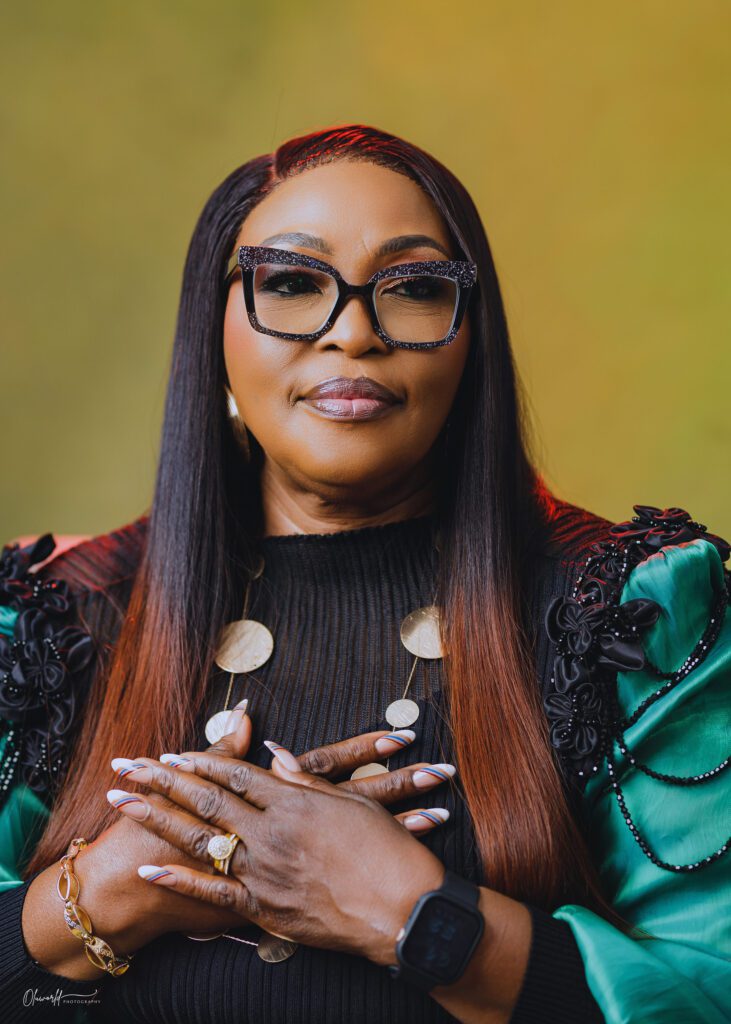
“I want to die empty.”
Knowledge, insight and experience, she believes, are not possessions to be hoarded. They are things to be documented and passed on. Writing allows a lesson learned in one life to remain available to another life decades later.
Her books extend the conversation beyond the therapy room, giving readers language for emotional experiences they may not yet know how to name.
THE COST OF LISTENING
Therapeutic work has an invisible discipline: the ability to listen to pain without becoming consumed by it.
Adetuberu describes days in which she has handled 10 to 12 therapy sessions, sometimes back-to-back. Her response has been to distinguish empathy from emotional entanglement. She listens deeply, she says, but does not absorb what she hears.
After more than four decades of counseling and therapy, she describes experience itself as a kind of training. The task is not to carry the client’s burden, but to help the client understand what to do with it.
“Balance is not about doing everything at once—it is about understanding your season and managing it wisely.”
FROM SURVIVAL TO WHOLENESS
Nigeria is under pressure from several directions at once. Economic strain can become emotional strain. Social media can turn comparison into a daily habit. Addiction can become an attempted escape from pain. Families can become places of both refuge and unresolved conflict.
Her response is a demand for earlier intervention. Mental health, she argues, should be integrated into primary healthcare, schools and workplaces. People should learn to recognise stress before it becomes collapse.
There is a generational dimension. Children inherit not only resources and culture, but models of coping. They watch how adults fight, apologise, withdraw, ask for help, handle anger and respond to vulnerability.
“When individuals are healed, relationships improve. When relationships improve, homes become healthier. And when homes are healthy, society becomes stronger.”
THE WOMAN BEHIND THE CALLING
There is a temptation when writing about a person with many public roles to turn the profile into a catalogue. The more revealing portrait is the one beneath the titles.
Adetuberu’s own description is simpler. She is a teacher, but she wants to teach for transformation. She wants people to understand themselves, confront patterns and stop being governed by wounds they have never examined.
The sermon, the therapy session, the book, the public conversation and the screening assessment all point toward the same destination: greater self-understanding.
Self-understanding, in her philosophy, is not an indulgence. It is infrastructure. It determines how a person loves, chooses, leads, parents, works and responds when life becomes difficult.
WHAT COMES AFTER THE WOUND
Adetuberu does not pretend that understanding the past automatically repairs it. Healing requires assessment, insight, responsibility and repetition. It is a process rather than an event.
Her advice to women who feel called to make an impact begins with an instruction that sounds almost counterintuitive in a culture that celebrates visibility: start with yourself.
“Heal first before you lead.”
“True impact is not built on passion alone—it is built on wholeness.”
The MendingLives platform is the institutional expression of that proposition: compassionate, confidential therapeutic care designed to help people understand themselves and move toward healthier lives. Its current site highlights confidential care, professional therapy and personalised support.
EPILOGUE: A LIFE MEASURED IN WHAT IT LEAVES BEHIND
There are people whose careers can be summarised by positions held. There are others whose lives are better understood as a set of questions they refused to stop asking.
For Rev. Dr. Olufunke Adetuberu, the question has been the same across decades and disciplines: what happens when a person stops hiding from the parts of life that hurt?
Her answer is neither sentimental nor simple. The past matters, but it does not have to become destiny. Faith matters, but it does not eliminate the need for psychological care. Love matters, but love without self-knowledge can become a poor substitute for compatibility. Success matters, but achievement cannot by itself prove that a person is well.
The work, then, is to go underneath.
Underneath the argument, the addiction, the marriage crisis, the anger, the silence, the ambition, the public image. Underneath is the person—and, sometimes, the wound that person has spent years trying not to see.
Adetuberu’s life has been shaped by the conviction that seeing it is the beginning of changing it.
For a woman who says she wants to “die empty,” the measure of a life is not how much it accumulated. It is how much it gave away in knowledge, healing, language, courage, and in the possibility that another person might begin again.
OFFICIAL SOURCE
MendingLives • www.mendinglives.ng • Current site: compassionate, confidential mental-health care, professional therapy, personalised support and screening assessments.