The rapid advancements in technology, particularly in the field of artificial intelligence, are profoundly transforming our world in ways that were once the realm of science fiction. From the dystopian landscapes envisioned in movies like Blade Runner to the friendly, problem-solving robots of Star Wars, our media has long fueled our imaginations with futuristic possibilities. Fast forward to today, and we find ourselves in a world that not only mirrors those fantastical visions but often exceeds them in complexity and capability.
These transformative changes are being felt across industries, governments, and even our very understanding of what it means to be human.
The potential of AI to augment and extend human intelligence has been demonstrated in numerous domains, from biology and mathematics to visual art and general game playing. This powerful technology holds immense upsides, but with it comes heightened risks and responsibilities. As AI becomes increasingly integrated into our lives, it is crucial that we actively steer it in a beneficial direction, engaging in proactive risk management to bring about a better future.
Let’s explore the transformative ways technology and AI are reshaping our reality.
1. Healthcare Revolutionized: One of the most profound impacts of AI and technology lies in the healthcare sector. Gone are the days when doctors relied solely on stethoscopes and x-rays. Today, AI algorithms can analyze vast amounts of medical data, allowing for faster and more accurate diagnoses. Imagine a world where AI can predict health issues based on genetic information and lifestyle choices, enabling personalized prevention strategies. From telehealth services providing global access to skilled practitioners, to robotic surgeries ensuring precision and reduced recovery times, technology is reshaping our approach to health and wellness.
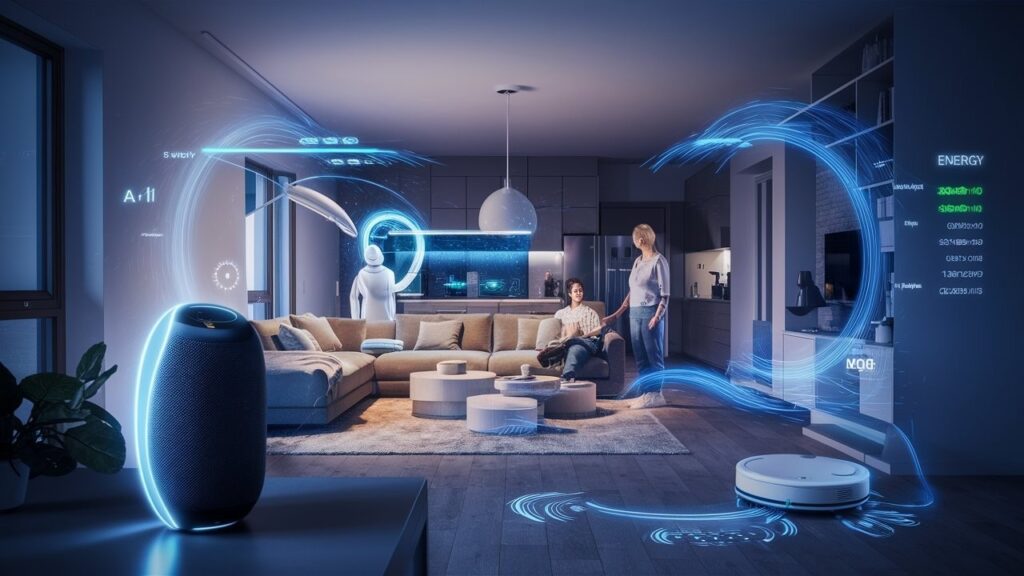
2. Smart Homes for Modern Living: The idea of a smart home was once confined to the realm of speculative fiction, but today it’s a growing reality. With the integration of the Internet of Things (IoT), everyday objects—from refrigerators to thermostats—are becoming interconnected. Homeowners can now control their environments with voice commands or through mobile apps, automating routines that save energy, enhance security, and improve convenience. Smart assistants, like Amazon’s Alexa and Google Home, are evolving to learn user preferences, making our homes not just habitable but adaptive to our lifestyles.
3. Autonomous Driving: Self-driving cars were once just a concept explored in sci-fi films, but they are now becoming a reality on our roads. Companies like Tesla, Waymo, and others are pioneering developments in autonomous vehicle technology, promising safer roads and reducing traffic congestion. Imagine stepping into your car, inputting your destination, and then simply relaxing while the vehicle navigates the path ahead. This transformation doesn’t just have implications for personal transport; it could revolutionize public transport systems, shipping logistics, and even urban planning.
4. Transforming Workplaces with AI: As technology advances, the workplace is undergoing significant changes. AI is streamlining operations, automating repetitive tasks, and enhancing productivity. Virtual assistants can manage schedules, analyze data, and provide insights much faster than human counterparts. Remote work tools powered by AI are making collaboration seamless, regardless of geographical distances. The advent of AI-driven analytics offers businesses an unprecedented ability to harness data and glean insights, allowing for agile decision-making that can adapt to market shifts in real-time.
5. AI in Creative Fields: Surprisingly, AI is also making waves in creative domains. Artists, musicians, and writers are increasingly leveraging AI tools to explore new horizons. We have AI-generated artwork pushing the boundaries of creativity, and algorithms composing symphonies that rival human talent, technology is as much a partner in the creative process as it is a tool. This collaboration between humans and machines is igniting debates about authorship and artistic integrity while simultaneously expanding the definitions of art itself.
6. AI and Climate Action: As we wrestle with climate change, AI is stepping in as a powerful ally in the fight for a sustainable future. It helps in optimizing energy consumption in smart grids and enables precision agriculture that minimizes waste. Technology is also helping industries reduce their carbon footprints. AI models can also forecast climate patterns with remarkable accuracy, aiding in disaster preparedness and resource allocation. By harnessing data, we can not only mitigate existing challenges but also plan for a more resilient future.
Conclusion
The once-imagined capabilities of technology and AI are not just creeping into our lives—they are transforming the essence of how we live, work, and interact with the world around us. As we navigate this new landscape, it’s crucial to stay informed and adaptable, ensuring that technological advancements enhance our lives while remaining mindful of the ethical implications of such changes. The future that was once confined to the pages of sci-fi novels is now unfurling before our eyes, offering a glimpse into a reality that is limited only by our imagination. Embracing this evolution can pave the way for a world that is not just smarter but kinder, more sustainable, and filled with possibilities we have yet to explore.