In a world that values natural talent, it is easy to think abilities are fixed. But psychology research shows the growth mindset offers a powerful alternative to believing in fixed potential. In most cases, when someone in a fast-paced, highly competitive sector isn’t accomplishing their objectives or setting the correct priorities, it is not a reflection on their abilities or efforts. It’s usually the result of not having a growth mindset. You may progressively ascend to greater heights in your career with a growth mindset by only changing the way you think and live.
The road to realizing our potential and accomplishing our goals is frequently littered with obstacles, disappointments, and development chances. Obstacles may easily discourage us in today’s fast-paced society, leading us to adopt a fixed mindset —the idea that our talents, intellect, and skills are unchangeable. However, Research indicates that adopting a growth mindset is crucial for personal and professional success. This mindset involves believing that talents can be improved through hard work and dedication to learning.
This article will cover tried-and-true methods for cultivating a growth mindset and viewing setbacks as chances for personal development. Whether your objective is to become the greatest version of yourself, succeed in your work, or learn a new skill, the knowledge and strategies offered here will provide you the means to overcome obstacles and realize your goals.

What Is A Growth Mindset?
The growth mindset is a belief system that promotes the idea that abilities and intelligence can be developed with time, effort, and dedication. These are all aspects of yourself that can grow, evolve, and improve with perseverance and over time. A growth mindset is a perspective that welcomes and embraces learning, resilience, and growth from failures.
This powerful perspective was first introduced by psychologist Carol Dweck through her extensive research on achievement, success, motivation, and mindset. According to her, in a growth mindset students understand that their talents and abilities can be developed through effort, good teaching and persistence.
How Do The Mindsets Work? The Mindset Rules
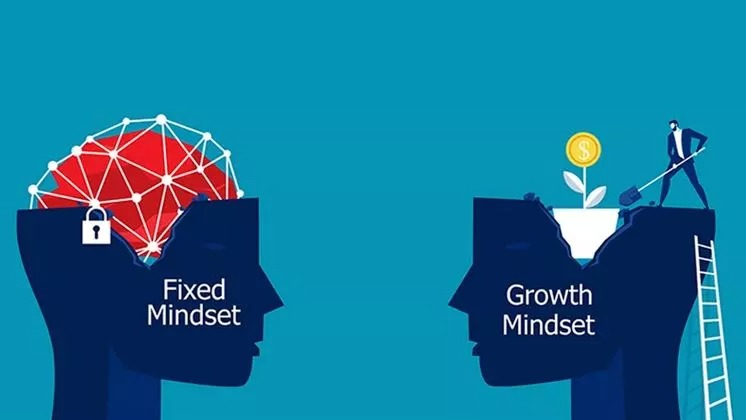
There are varieties of mindsets each of which can help or hurt our well-being. We have the fixed and the growth mindsets. These mindsets work by creating entire psychological worlds around us and each world operates by different rules.
Rule #1. In a fixed mindset the cardinal rule is: Look talented at all costs. In a growth mindset, the cardinal rule is: Learn, learn, learn!
People with a fixed mindset prioritize looking smart over learning from challenging tasks, believing their intelligence is fixed. In contrast, those with a growth mindset value learning over grades and results, which leads to higher performance.
Rule #2. In a fixed mindset, the second rule is: Don’t work too hard or practice too much. In a growth mindset, the rule is: Work with passion and dedication—effort is the key.
Individuals with a fixed mindset think that natural talent should be enough, and hard work is a sign of weakness. This mindset often leads to unfulfilled potential. For instance, a talented athletes who rely on their natural abilities rather than putting in effort. On the other hand, those with a growth mindset understand the importance of hard work in enhancing their skills over time. Studies have shown that athletes who believe in the power of effort and practice outperform those who rely solely on natural talent. It’s crucial for coaches to prioritize effort and practice over innate ability to help athletes reach their full potential.
Rule #3. In a fixed mindset, the third rule is: When faced with setbacks, run away or conceal your deficiencies. In a growth mindset, the rule is: Embrace your mistakes and confront your deficiencies.
We have found over and over that a fixed mindset does not give people a good way to recover from setbacks. After a failure, fixed-minded persons say things like “I’d spend less time on this thing from now on” or “I would try to work my way around this next time.” They make excuses, they blame others, and they make themselves feel better by looking down on those who have done worse. Everything but face the setback and learn from it. It was so interesting to see in the last Olympics how many champions prevailed in events that were at some point not their strong suit. Chris Hoy, the Scottish gold medal cyclist, saw his specialty eliminated from the Olympics and had to reinvent himself. He did not sit and lament his fate or blame others; he got to work.
Strategies for Developing a Growth Mindset
Cultivating a growth mindset is a continuous process of self-reflection and conscious effort. Here are some practical strategies to help you develop and nurture this powerful mindset:
1. Acknowledge and embrace imperfection. As individuals, we all have our flaws, peculiarities, and weirdness—our imperfections.
2. Stop seeking approval from others. Approval from others can often prevent a growth mindset. Cultivate self-acceptance and self-approval. Learn to trust yourself. You are the only person who will always be there for you in your life so you are the only one you need to impress.
3. Take a step deeper into authenticity. Pretending to be someone who you are not disrespects who you really are. It makes you a fake. It diminishes what you have to offer. Becoming truly authentic is a process that takes time and a lot of inner work. Once you do, you’ll likely be more driven to pursue your true goals, which puts you in a growth mindset.
4. Cultivate a sense of purpose. Does your life feel like it is purpose-driven? If yes, define for yourself what that purpose encompasses. If you are drawing a blank, ask that your life’s purpose become clear to you. Meditate or contemplate on “purpose” and see what tidbits come through until you feel like you know the essence of your purpose, or perhaps part of it. Then pursue it—that’s what’ll help you build a growth mindset.
5. Redefine “genius.” We all have strengths and weaknesses. Explore and appreciate your strengths, and work to improve your weaknesses. This effort can help you build a growth mindset.
6. Turn criticism around until you find its gift. The purpose of criticism is to make things better. Someone else can see what you are doing from a slightly different perspective than you and may have some valuable suggestions for you. If you open up to hearing suggestions, you can more easily develop your growth mindset.
7. Value the process over the end result. Remember, it’s the journey that matters, not the destination.
8. “Not yet” is OK. When struggling with a task, remind yourself that you just haven’t mastered it “yet.” If you stick with it, time and practice will lead to improvement and self-development.
9. Take risks in the company of others. Try not to take yourself too seriously. Be willing to make mistakes in front of others, because if you’re growing, this is bound to happen. And making mistakes in front of others will usually get easier with practice.
10. Be realistic. It takes time, sometimes lots of time, to learn a new skill, like learning a new language or learning to play an instrument or learning how to become a good lawyer. Keeping this in mind can help with a growth mindset.
11. Speed is not important. When you have a growth mindset, the end results are less of a focus. Instead, you fully engage and put effort into the process, no matter how long it takes. Incidentally, focusing on the process often also improves results, because you did put a lot of effort in along the way.
12. Own your attitude. If you value having a growth mindset, then take the time and make the effort to develop it. Persist and opportunities will come. Cultivate resilience along the way. You are remodeling your mind and that’s a pretty cool thing.
13. Learn from the mistakes. You should approach mistakes with curiosity and eagerness to find a lasting solution. Learn from your mistakes and fashion ways of turning it as a motivation to reaching your end goal. Also, you can learn from the mistakes of others. If you can, then you may be able to make fewer mistakes. This can sometimes calm the fear of trying new things, a key aspect of building a growth mindset.
14. Face your challenges bravely. If you are being faced with a terrifying challenge, consider your challenge as an “opportunity,” Each challenge or opportunity invites us into a new experience that is a sort of adventure.
15. Pay attention to your words and thoughts. Start to pay attention to the words you speak, even the words in your mind. If your words are low or dark, the results may be also. So watch yourself. Listen to what you are saying and thinking. Censor yourself and become your own guide.
16. Join a circle of Growth-Minded Individuals. It is important that you surround yourself with individuals with a growth mindset, persons you can learn and walk with on the journey of growth. You can’t afford to be dispirited. It is also necessary within this time to study how these persons have navigated challenges. This will serve as a model to you.
Conclusion
Having a growth mindset is a continuous process of learning, adapting, and discovering oneself. It involves facing limitations, being vulnerable, and believing in personal growth. Embracing challenges, persevering through setbacks, taking responsibility, and putting in effort are key components of a growth mindset.
By choosing to make the extra effort to build a growth mindset, you can make your mental processes work for you, resulting in a greater likelihood that you get the results you’re looking for and live the life you want to live.